
How to Regulate Sebum
Advanced encapsulation technology that mirrors your skin's natural barrier — delivering active ingredients with precision, depth, and care.
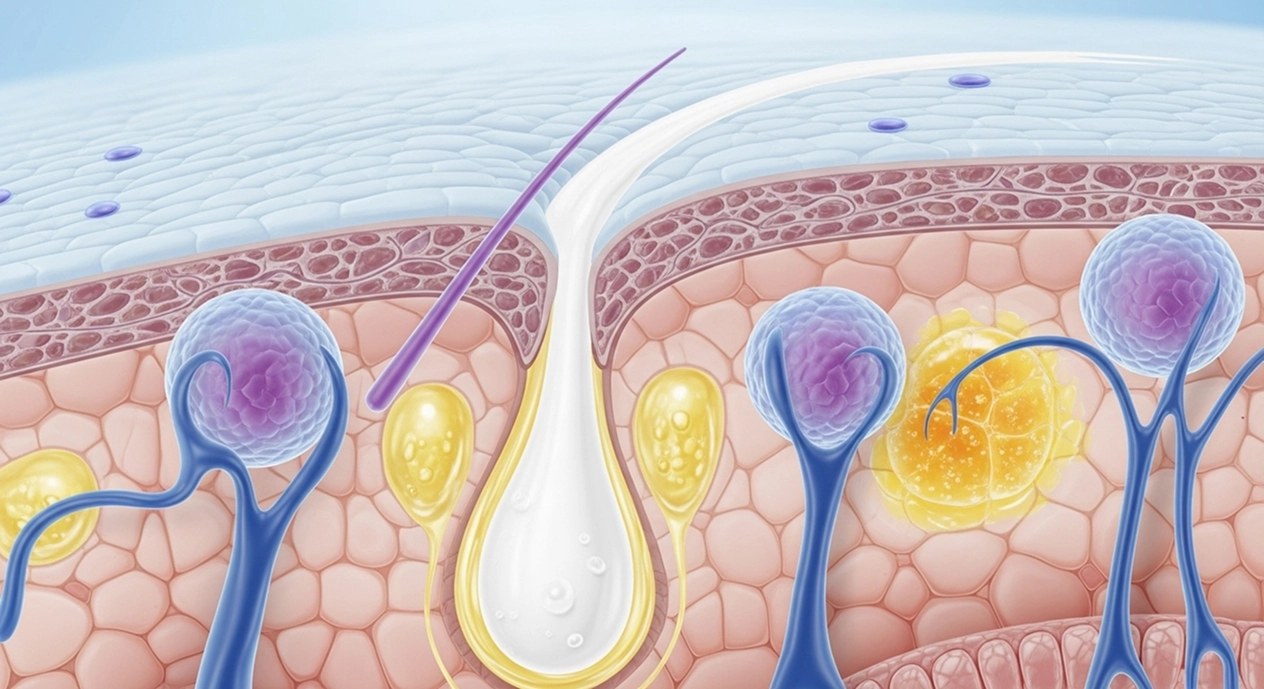
Whether you have dry, oily, or combination skin, chances are you've asked yourself this question at some point: What is sebum, and how do I control it?
What is Sebum?
Sebum is an oily, wax-like substance produced by sebaceous glands found mostly on the face, scalp, chest, and back. It plays a vital role in maintaining the skin's moisture barrier, protecting against bacteria, and keeping skin soft and elastic. However, hormonal changes, poor skincare habits, harsh cleansers, stress, and diet can all disrupt this balance — leading to either excess oiliness or dehydrated, reactive skin.
Why Sebum Balance Matters
- Maintains hydration: Sebum locks in moisture and prevents excessive water loss, keeping the skin supple and protected — especially important as sebum production naturally declines with age.
- Preserves elasticity: Balanced oil levels contribute to smooth, plump, and youthful-looking skin by maintaining its flexibility and resilience.
- Stabilizes skin's pH: Sebum contains fatty acids that help maintain the skin's ideal pH (around 5.5), which supports barrier function and prevents irritation.
- Protects against external aggressors: Acting as a natural defense shield, sebum helps guard the skin against bacteria, allergens, pollution, and oxidative stress.
How to Regulate Sebum Naturally and Effectively
- Use a pH-balanced cleanser: Avoid harsh, stripping products. A gentle cleanser that matches your skin's natural pH (~5.5) helps maintain barrier health and prevents rebound oiliness.
- Don't skip moisturizer: Even oily skin needs hydration. Choose lightweight, non-comedogenic moisturizers to balance sebum levels without clogging pores.
- Incorporate niacinamide or zinc: These active ingredients are known to visibly regulate oil production while calming inflammation and improving texture.
- Limit exfoliation: Over-exfoliating can damage your skin barrier and trigger more oil production. Stick to 1–2 times per week and always hydrate afterward.
- Watch your diet and stress levels: High-sugar, greasy foods and chronic stress can stimulate excess oil production. A balanced lifestyle supports balanced skin.
- Use targeted treatments like retinoids or clay masks: Retinoids normalize oil flow and skin turnover, while clay-based formulas absorb surface oil without over-drying.